01Project challenge
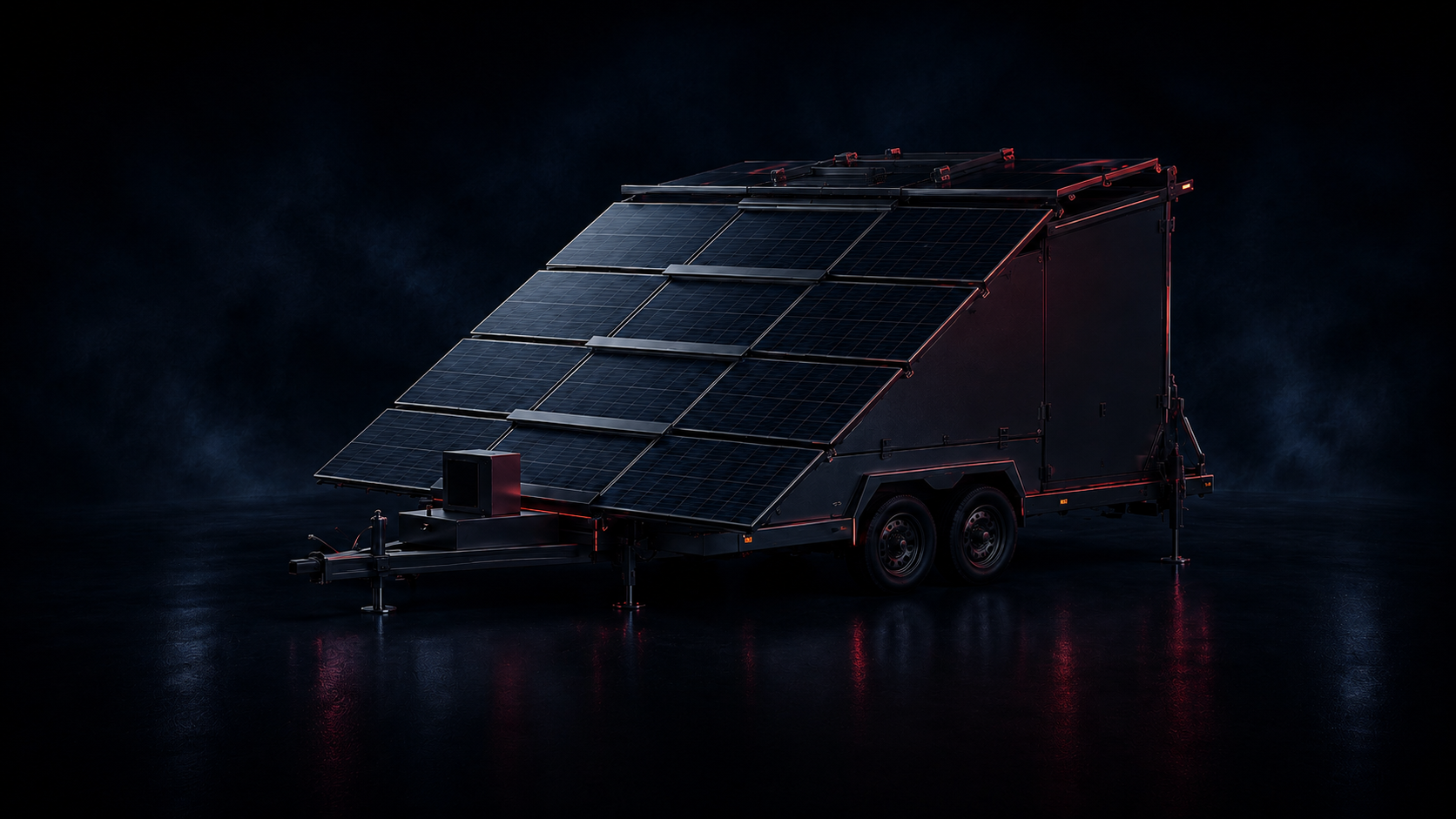
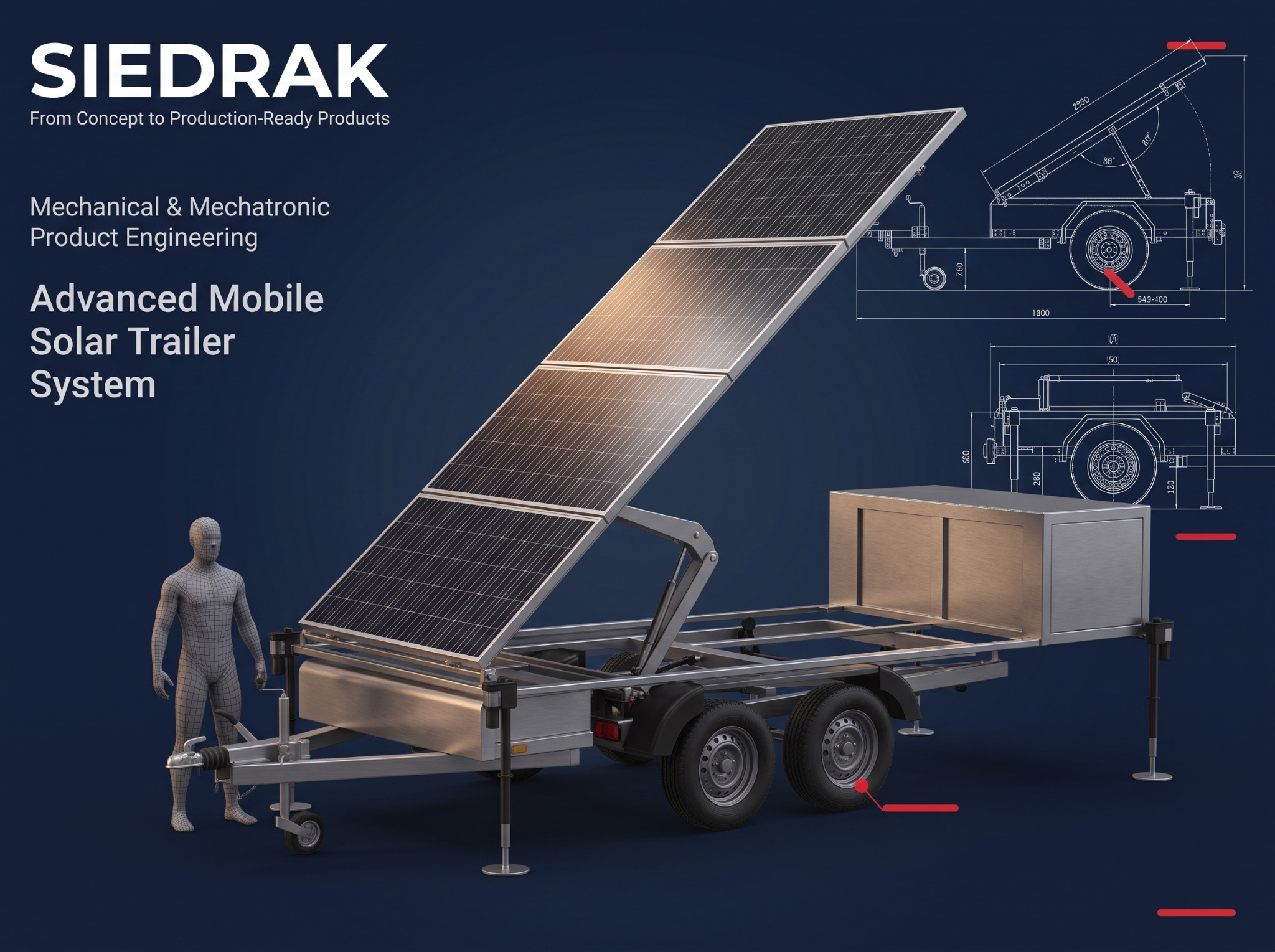
The main engineering challenge was to integrate a large photovoltaic surface onto a mobile platform without making the trailer excessively large or difficult to transport. The system therefore required careful consideration of solar-panel deployment and folding geometry, structural support of large panel arrays, lifting and tilt mechanisms, trailer packaging and weight distribution, stabilizing supports during deployment, equipment and control-system integration, access for maintenance and servicing, safe clearance between moving components, and practical transportation and setup.
02Engineering approach
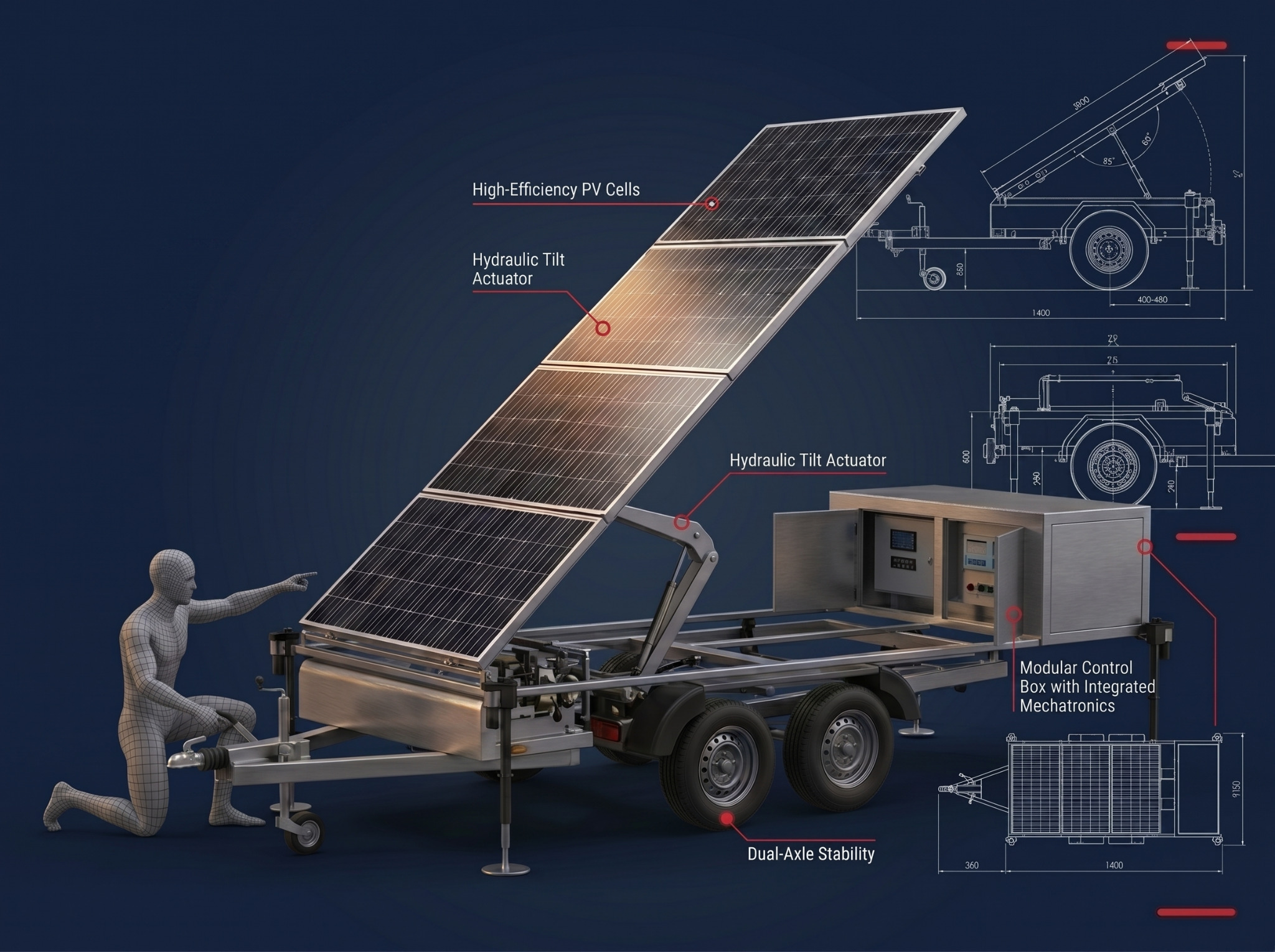
The concept was developed around a modular trailer chassis with deployable solar structures. Different mechanical architectures were investigated to understand how the system could be optimized for different applications, capacities, deployment requirements, and transportation constraints. The core engineering architecture includes a rigid trailer frame, photovoltaic support structures, pivoting or folding panel assemblies, mechanical lifting systems, stabilizing legs, equipment compartments, and dedicated areas for electrical and control hardware.
03Deployable solar array
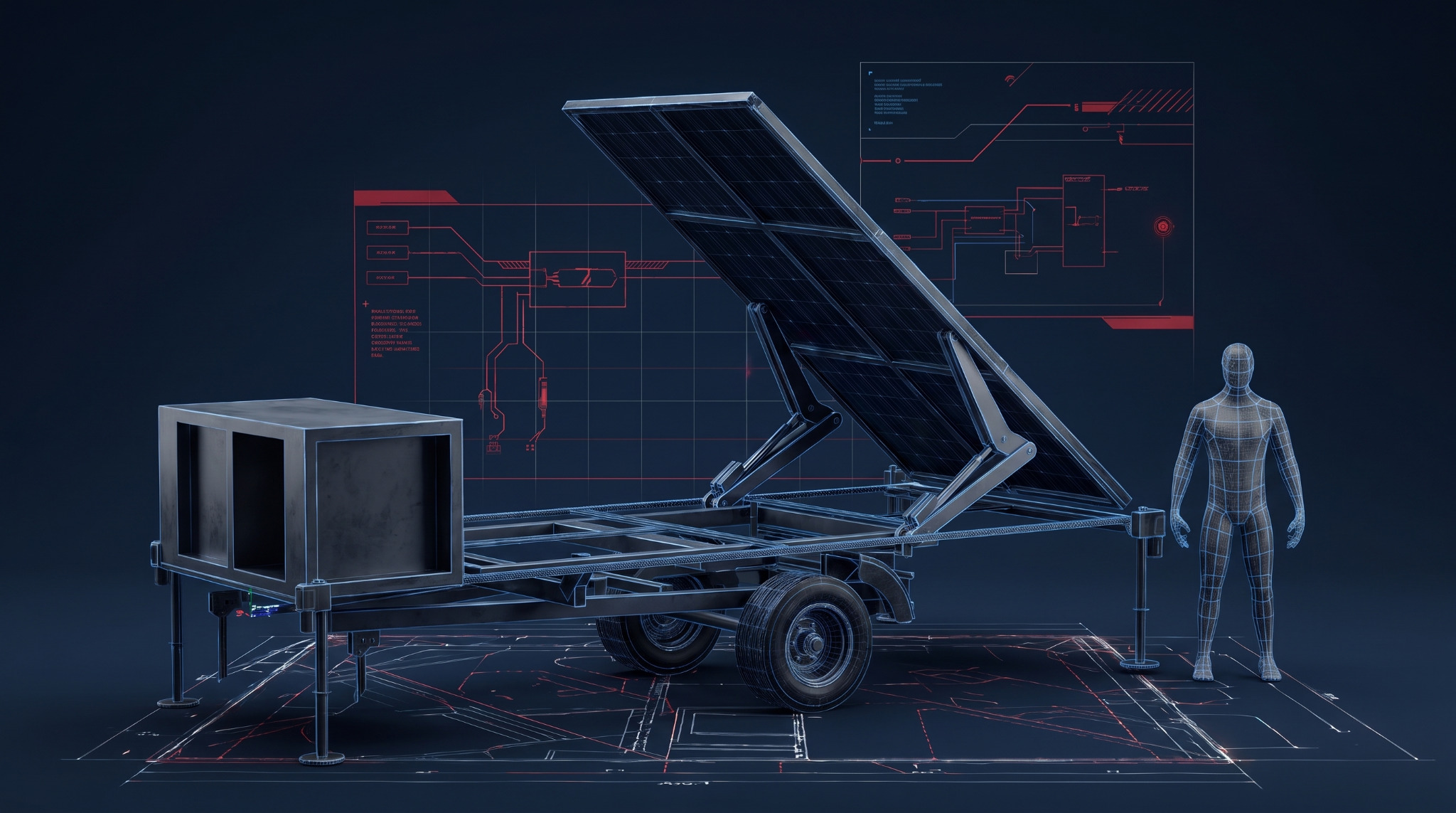
The photovoltaic modules are mounted on engineered structural frames rather than directly onto the trailer body. This allows the panel assemblies to rotate, tilt, fold, extend, or deploy in stages depending on the selected configuration. The supporting structure is designed around controlled pivot locations and reinforced load paths so that the forces generated by the extended solar array can be transferred back into the main trailer chassis.
04Lifting & tilt mechanism
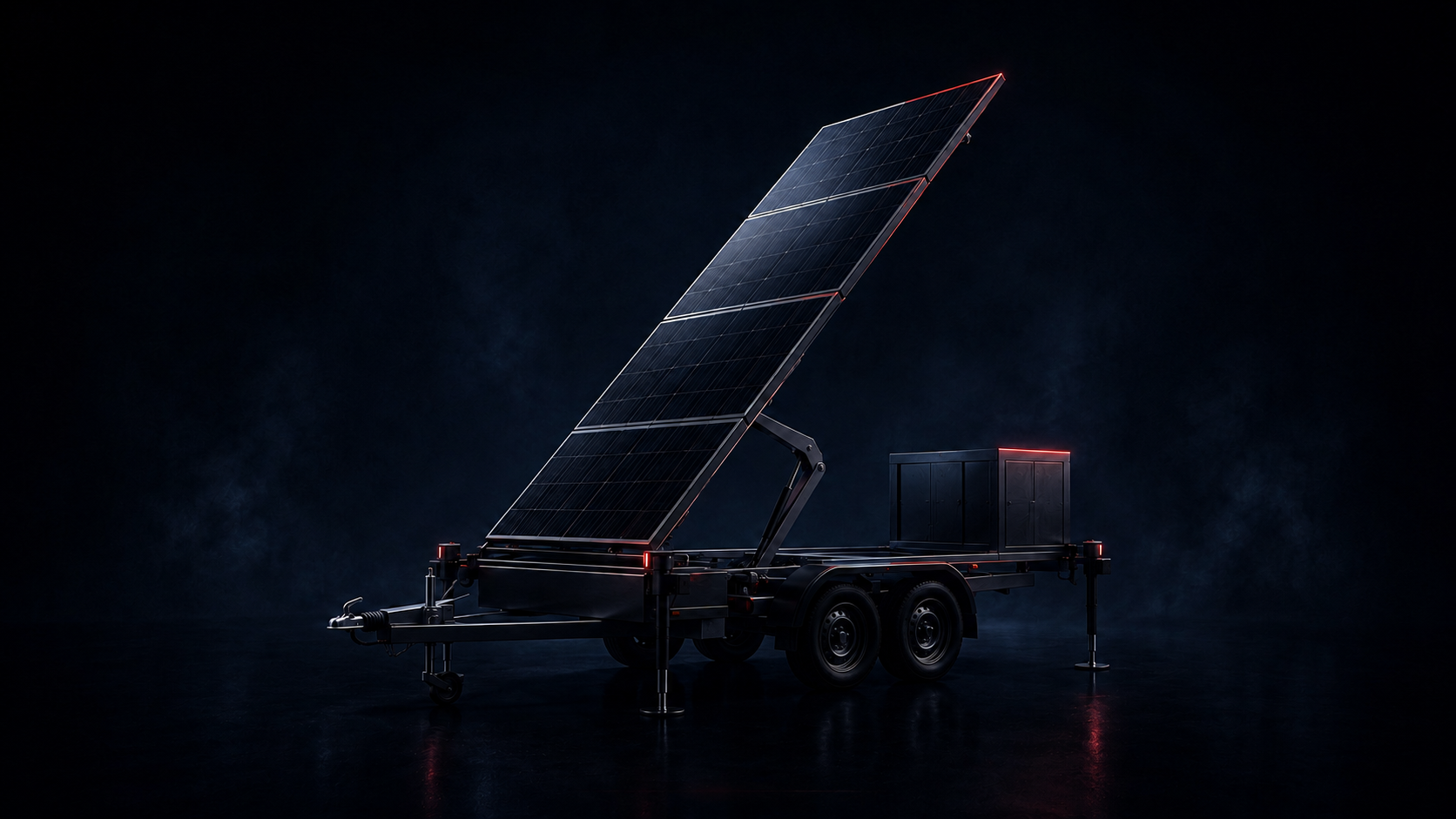
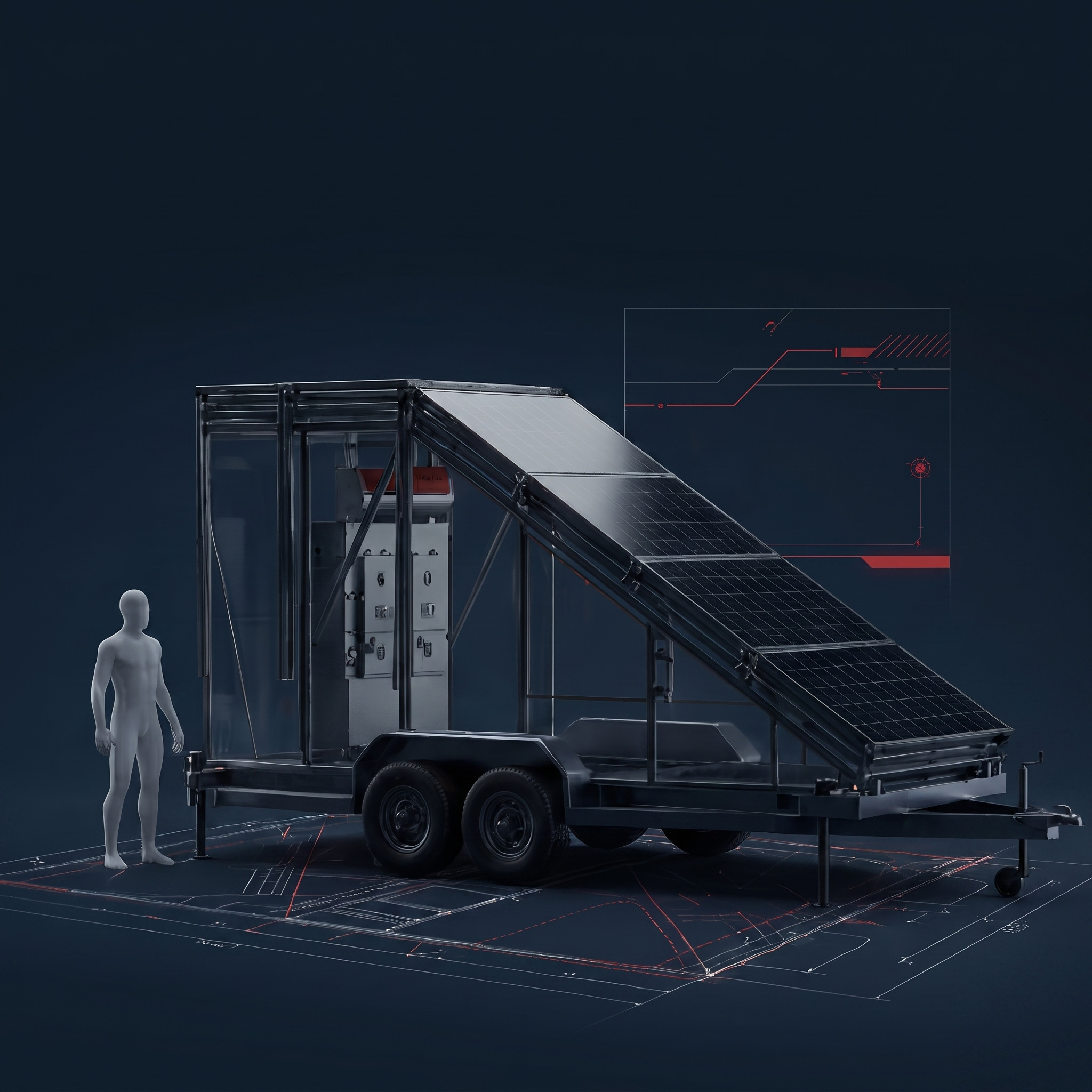
A mechanical lifting system controls the orientation of the primary solar structure. The mechanism converts actuator movement into controlled angular motion of the panel frame while keeping the structure supported throughout deployment. Depending on the configuration, this system can be implemented using hydraulic actuators, linear actuators, mechanical linkages, or pivoting support arms. Actuator force, available travel, panel weight, pivot position, and final tilt angle are treated as one connected design problem.
05Structural chassis
The trailer chassis acts as the structural backbone of the system. It supports the solar assemblies, lifting mechanisms, equipment enclosures, wheels, stabilizers, and towing structure while providing the stiffness required when the solar array is deployed. Particular attention is given to the connection between the moving solar structure and the stationary trailer frame because these locations carry some of the highest mechanical loads in the system.
06Stabilization system
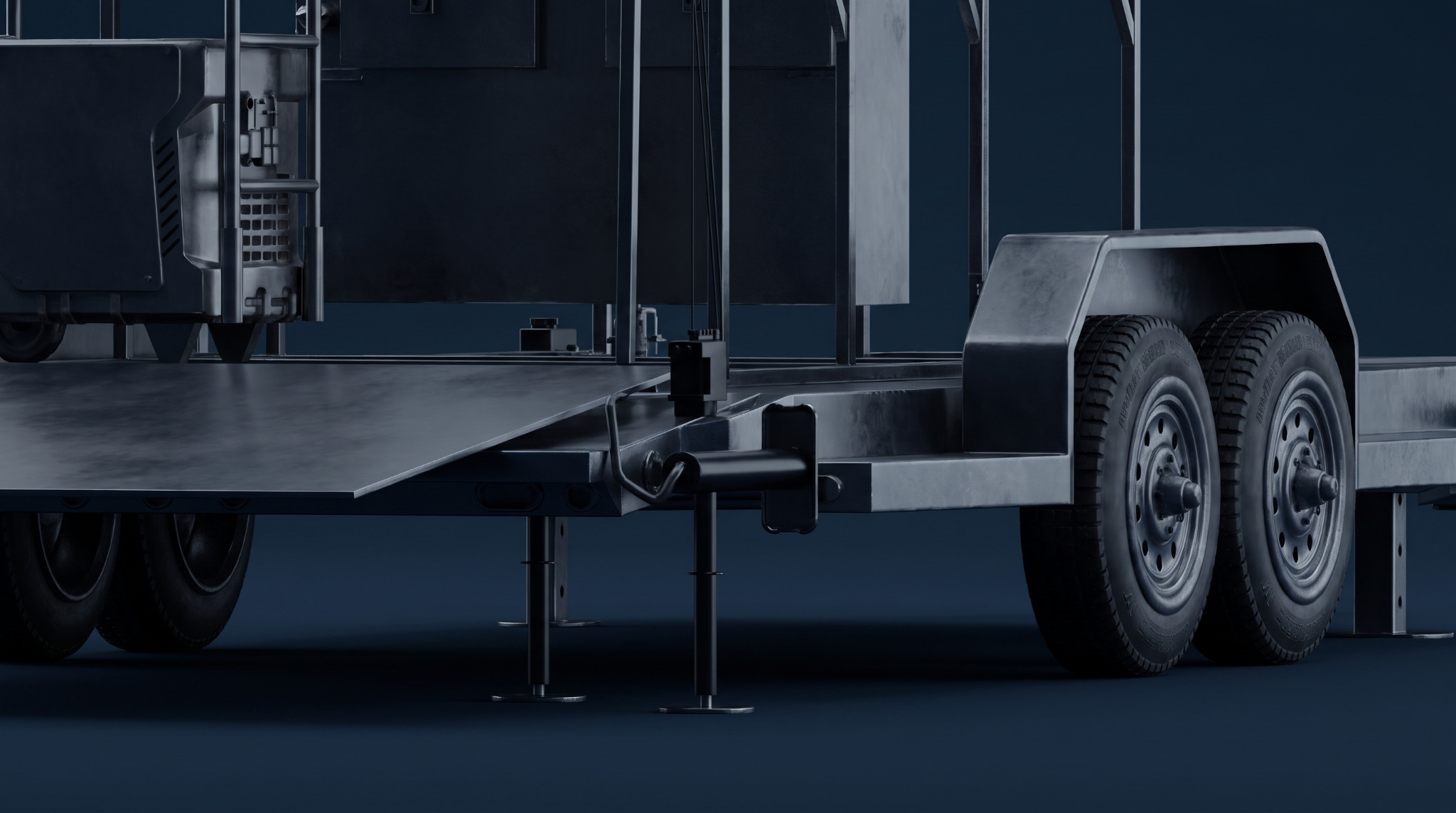
Deploying a large solar array significantly changes the effective size and loading condition of the trailer. Adjustable stabilizing legs are positioned around the chassis to transfer operating loads directly into the ground and reduce movement of the suspension while the system is deployed. The stabilizers also help increase resistance to rocking, torsional movement, uneven terrain, and wind-induced loading on the solar structure during stationary operation.
07Integrated equipment packaging
Dedicated equipment compartments provide space for the electrical and mechatronic components required by the system. Depending on the final application, these areas can accommodate batteries, inverters, charge controllers, electrical protection hardware, control electronics, actuator control systems, monitoring equipment, and communications hardware. The mechanical layout keeps these components protected while maintaining access for inspection and maintenance.
08Modular design architecture
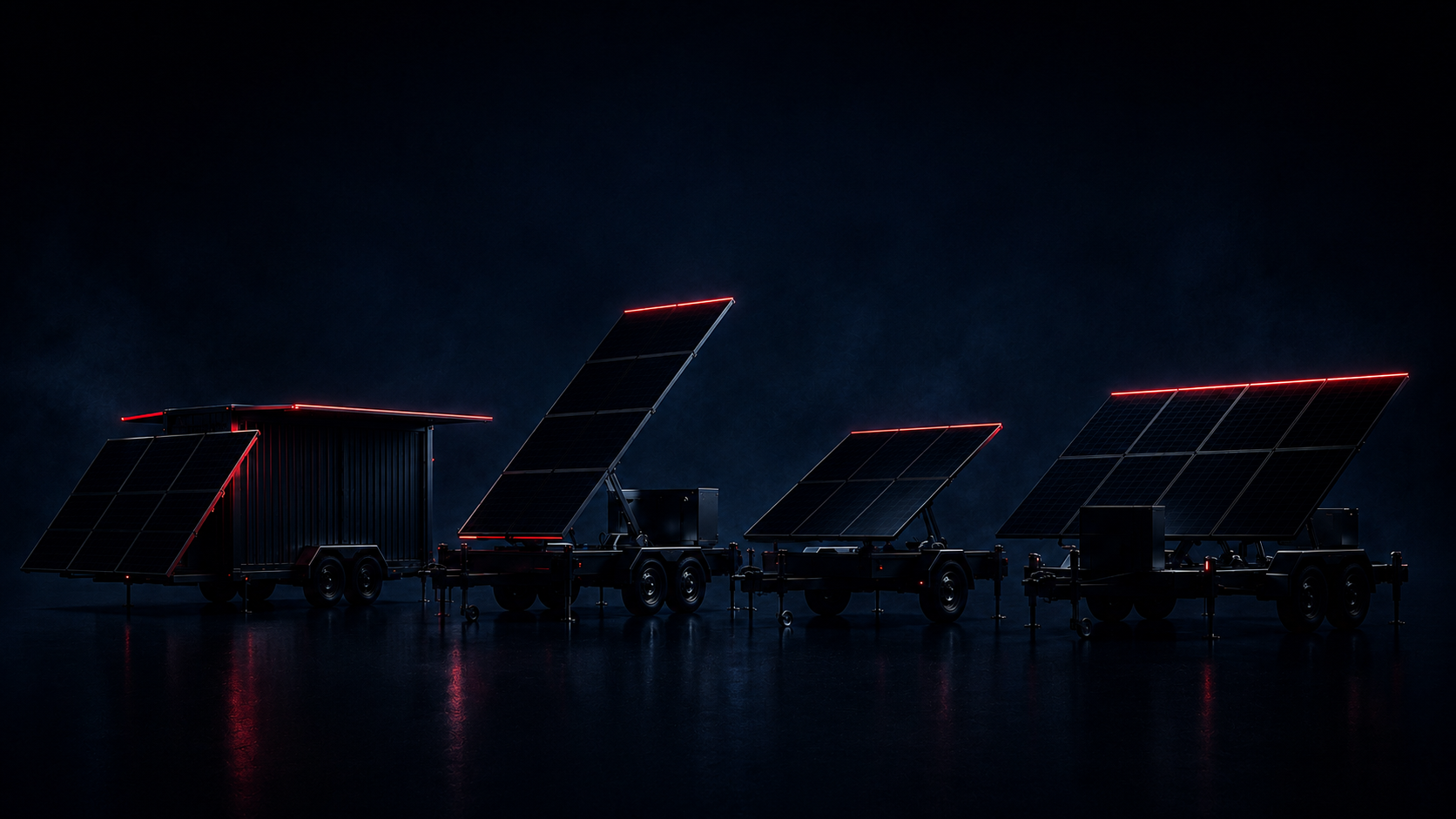
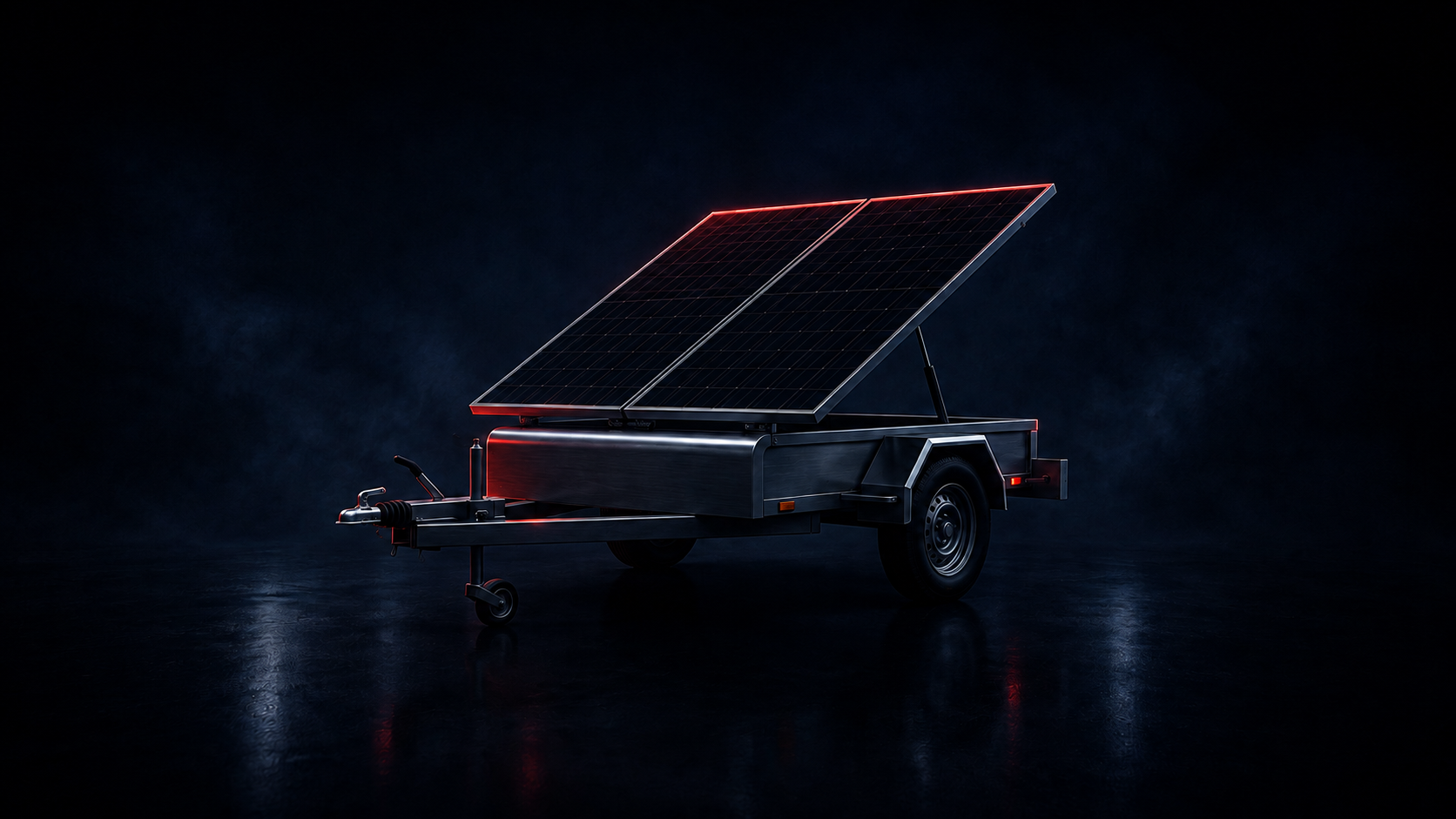
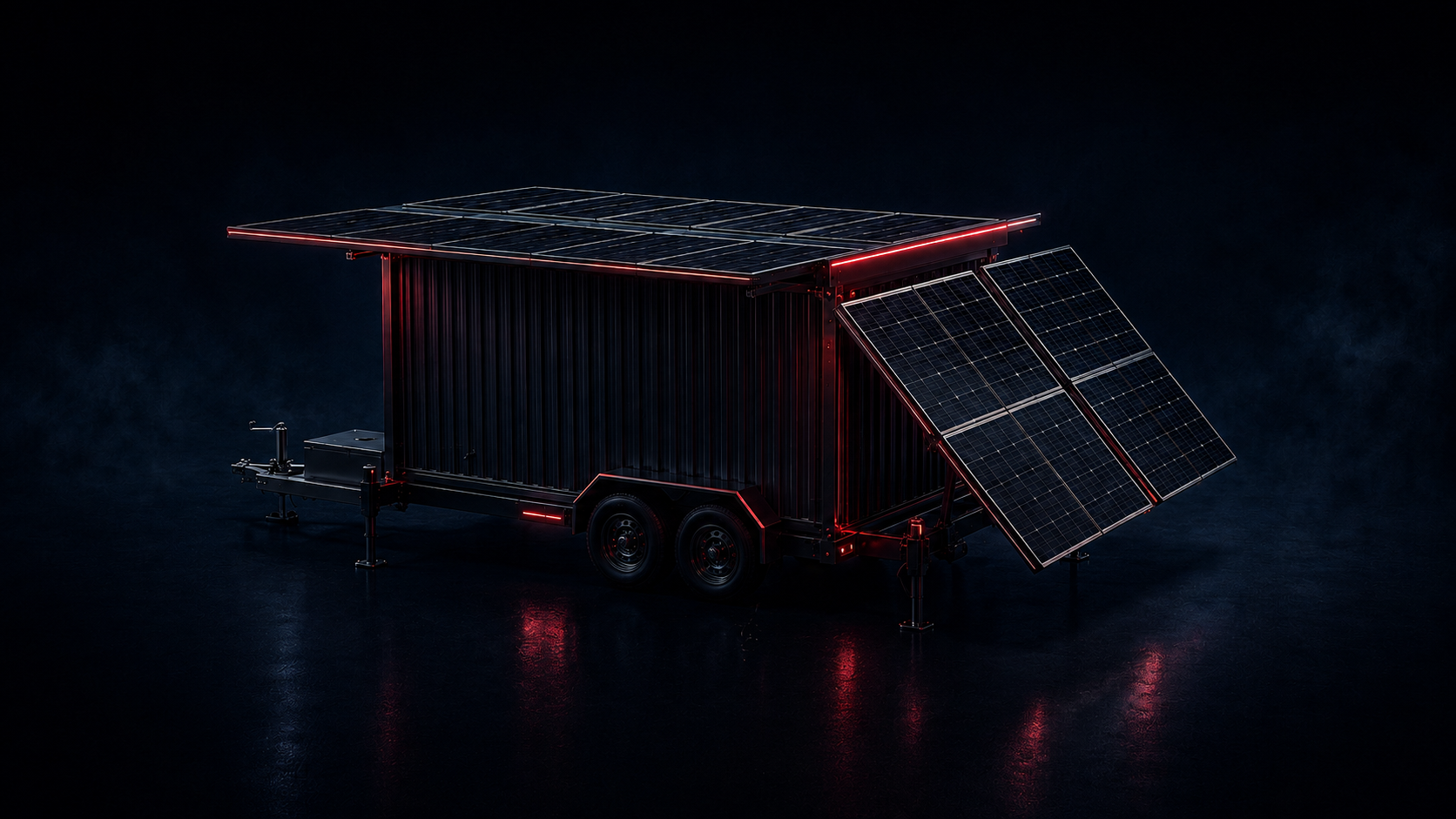
One of the major advantages of the concept is its modularity. Rather than relying on a single trailer configuration, the system can be adapted into several platform sizes and deployment architectures. The concepts shown here explore configurations ranging from compact single-array trailers to larger multi-panel deployable systems and enclosed mobile energy platforms. This enables the same engineering philosophy to be adapted to different energy requirements and operating environments.